Could this fit your property?
Couples traveling together, close friends and small families who want a tactile outdoor stay with private sleeping and dependable shared facilities. This direction fits a host who can deliver the specific experience and its upkeep.
New build or substantial conversion · Specialist upkeep
Guest focus: Families, Small groups.
Suitable setting: A woodland edge, upland meadow or nature-retreat parcel with suitable drainage, access, utilities and locally approved structures.
- When another approach fits better
- A property that cannot provide suitable washing facilities or seasonal resilience makes another concept a better starting point.
- Minimum practical requirements
- An outdoor site with reviewed structure, sanitation and drainage
- Verify permitted use, utilities, occupancy and operator responsibilities for the real project
- Changes to plan
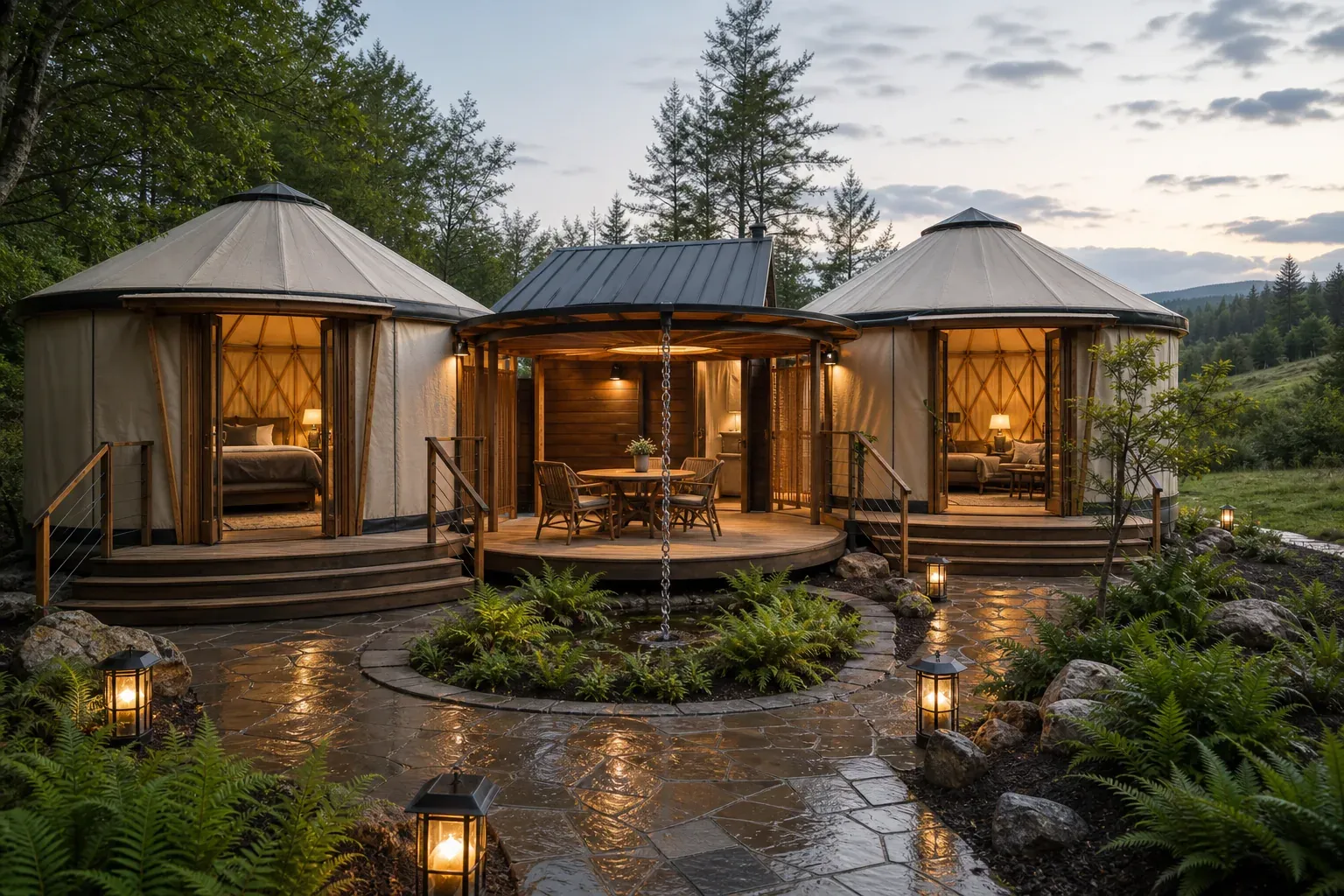
- Connect two yurts to an enclosed service core and sheltered gathering deck
- Ongoing hosting checklist
- Inspect roofs, moisture and weather protection
- Maintain the shared service core
- Example guest journey — fictional
- Guests follow a short lantern path to the covered ring and understand the whole camp from one sheltered threshold. Bags move into the private sleeping yurt, food into closed kitchen storage and damp layers onto the ventilated service wall. Breakfast and evening conversation happen in the social yurt or on the ring deck, while rain passes through the central chain into the planted basin. Clear guidance sets realistic expectations for sound, temperature, insects and site conditions. The sample Host-Pilot guide shows how a future operator could communicate weather response, heating and ventilation, fire rules, wildlife, quiet hours, path lighting, utilities and backup plans without presenting the concept as an operating campsite.
Editorial fit guidance, not a construction specification, safety certification, cost estimate or return forecast.